- Study demonstrates significant, durable glycemic control alongside comprehensive multi-organ benefits across the Cardiovascular-Kidney-Metabolic (CKM) spectrum
- HTD1801 New Drug Application (NDA) accepted for review by the China NMPA, accelerating its path toward commercialization
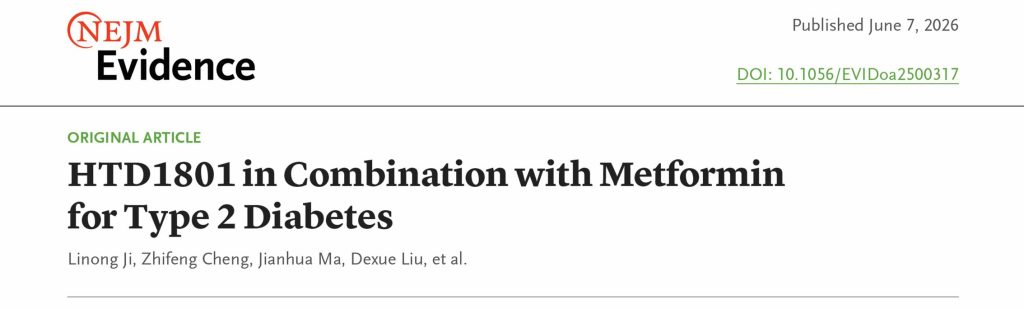
ROCKVILLE, MD and SHENZHEN, CHINA, June 8, 2026 – HighTide Therapeutics, Inc. (2511.HK), an innovative biopharmaceutical company specializing in the development of multifunctional, multi-targeted therapies for cardiovascular–kidney–metabolic (CKM) diseases, announced that the results from its Phase III clinical study (SYMPHONY-2), evaluating HTD1801 in combination with metformin for the treatment of type 2 diabetes mellitus (T2DM), have been published online in NEJM Evidence, the journal of the New England Journal of Medicine (NEJM) group. At the 86th Scientific Sessions of the American Diabetes Association (ADA), Professor Linong Ji, Director of the Department of Endocrinology at Peking University People’s Hospital, the principal investigator of SYMPHONY-2 and the corresponding author of the publication, attended the meeting and presented the study results.
SYMPHONY-2 is a randomized, double-blind, placebo-controlled Phase III clinical trial designed to evaluate the efficacy and safety of HTD1801 in combination with metformin among adults with T2DM with inadequate glycemic control despite stable metformin use. Results published in NEJM Evidence demonstrated that:
- Glycemic control: At Week 24, the study met the primary endpoint, with a reduction in HbA1c of −1.2% in the HTD1801 group. A significantly greater proportion of patients treated with HTD1801 compared with placebo (33% vs. 11%) achieved target HbA1c levels below 7%. At Week 52, the change in HbA1c from baseline was −1.1% in patients treated with HTD1801 throughout the trial and −1.2% in patients switched from placebo to HTD1801 during the open-label extension (OLE) period. These findings suggest that HTD1801, in combination with metformin, provides significant and sustained glycemic control.
- Cardiometabolic and anti-inflammatory benefits: The HTD1801 group demonstrated significantly greater reductions in LDL-C (−13.6 vs. 0.2 mg/dl) and GGT (−4.4 vs. 0.6 U/l) at Week 24. Key secondary endpoints capturing cardiometabolic and inflammatory markers were significantly improved in the HTD1801 versus placebo groups at Week 24, and these improvements in efficacy endpoints persisted through 52 weeks.
- Safety: Serious adverse events were uncommon. Diarrhea was the most common adverse event, and the majority of cases were mild to moderate in severity and improved over time.
Dr. Linong Ji, Director of Peking University Diabetes Center, Director of the Department of Endocrinology at Peking University People’s Hospital, said: “The current diabetes drug developments are heavily concentrated on GLP-1-based therapies. While GLP-1 therapies hold significant clinical value, they do not adequately address the full spectrum of pathophysiological mechanisms underlying T2DM. To truly meet the multifaceted needs of T2DM management, continued innovation across a diverse range of therapeutic targets remains essential. HTD1801, with its unique dual mechanism around the AMPK-NLRP3 axis, demonstrated multiple benefits in the SYMPHONY-2 study, including superior and durable glycemic control, lipid reduction, attenuation of inflammation, and improvements in renal function. These comprehensive benefits support that HTD1801 represents not only a novel and truly differentiated therapeutic option for patients with T2DM, but also a foundational therapy for CKM diseases. We believe the positive results from SYMPHONY-2 study will provide strong support for the regulatory approval and commercialization of HTD1801.”
Dr. Liping Liu, Founder, Chairperson, and CEO of HighTide Therapeutics, said: “We are very pleased that the SYMPHONY-2 study results have been published in NEJM Evidence. As a first-in-class multifunctional and multi-targeted therapeutic candidate, HTD1801 has consistently demonstrated its clinical potential as a foundational therapy for CKM diseases across multiple clinical studies. We are actively advancing the commercialization of HTD1801 and look forward to bringing this innovative therapy to patients worldwide living with CKM diseases as soon as possible.”
About HTD1801
HTD1801 is a first-in-class new molecular entity that targets the residual risks underlying cardiovascular–kidney–metabolic (CKM) diseases. It is an orally delivered, anti-inflammatory metabolic modulator (AIMM) that, as a single molecule, exerts a unique dual mechanism of action through activation of AMP Kinase and inhibition of the NLRP3 inflammasome. These two complementary pathways mitigate metabolic dysfunction. Multiple global clinical studies have demonstrated the comprehensive benefits of HTD1801, including improved insulin sensitivity, glycemic control, lipid lowering, renal protection, weight reduction, hepatic improvement, and anti-inflammatory effects. Collectively, these findings support the potential of HTD1801 to serve as a foundational therapy in CKM disease management.
About HighTide Therapeutics
HighTide Therapeutics, Inc. (2511.HK) is an innovative biopharmaceutical company dedicated to developing multifunctional, multi-targeted therapies for cardiovascular-kidney-metabolic (CKM) diseases. The company focuses on delivering breakthrough treatments that generate comprehensive, multi-organ benefits for patients worldwide. HighTide has built an innovative, globally integrated pipeline of proprietary assets and advanced multiple clinical programs across CKM diseases. The company’s lead asset, HTD1801, has received two Fast Track designations and one Orphan Drug designation from the US Food and Drug Administration (FDA), and has been selected for China’s National Major Science and Technology Project for Significant New Drug Development.
For more information, please visit www.hightidetx.com Contact: pr@hightidetx.com